
In Collaboration with BRIN Publishers, UIN Jakarta Press Explores Strategies for Converting Scientific Works into Books
- 31 July 2026
- 5 min read
- 213
-

UIN Jakarta Library Building, News Online – Every year, thousands of scientific papers— theses, dissertations, and research reports —are produced by the Syarif Hidayatullah State Islamic University (UIN) Jakarta. Behind this abundance of academic work lies a vast untapped potential. Many research findings remain as documents stored in libraries or institutional repositories, even though these scientific findings could be developed into books that enrich national literature, serve as learning references, and reach a wider audience.
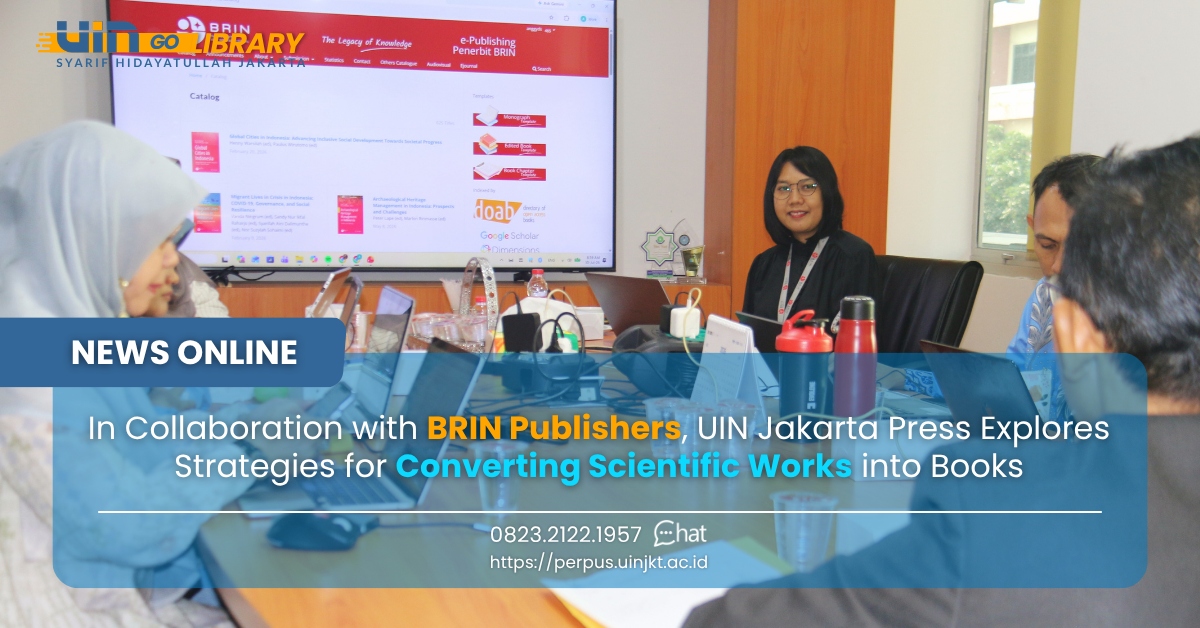
Departing from these challenges, efforts to improve the quality of academic publications continue to be strengthened by UIN Syarif Hidayatullah Jakarta, through UIN Jakarta Press. Collaborating with BRIN Publishers they held a training on Strategies for Converting Scientific Works into Books on Thursday (30/07) yesterday, in the 3rd Floor Meeting Room of the UIN Syarif Hidayatullah Jakarta Library Building. This activity presented Anggi Denok, Manuscript Acquisition Editor of BRIN Publishers, who shared her experiences and editorial strategies in converting scientific works into books that are worthy of publication and have a wider reach.
The training is part of UIN Jakarta Press's commitment to strengthening the scientific publication ecosystem within UIN Syarif Hidayatulah Jakarta. The entire UIN Jakarta Press team participated in this activity, specifically to strengthen editorial capacity, broaden insights into the manuscript acquisition process, and align perceptions in assisting the academic community in developing scientific works into quality books. Amidst the increasing research productivity of lecturers and students, enhancing the capacity of the publishing team is a step to ensure that every manuscript receives professional editorial support from the selection process to publication.
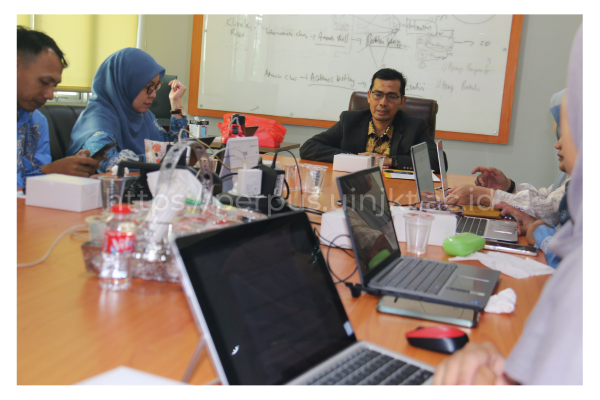 In his remarks, Agus Rifai, Head of the UIN Jakarta Library, emphasized that research should not be limited to academic requirements alone. He argued that every scientific work has the potential to provide broader benefits if packaged in book form that can reach a wide range of readers.
"It's not enough for universities to simply produce quality research. The next challenge is ensuring that these research results are readable, utilized, and have a real impact on society. One of the most effective strategies is to develop scientific works into more communicative books, without compromising their academic strength," said Agus Rifai.
He added that the presence of UIN Jakarta Press is part of the institution's efforts to build a sustainable publication culture. Through mentoring and collaboration programs, particularly with BRIN Publishers, UIN Jakarta Press is expected to become a growth platform for academics to produce quality academic books that make a real contribution to the development of science.
"We want to build a publication ecosystem that goes beyond scientific journals and institutional repositories. Academic books play an equally important role as a medium for disseminating knowledge. Therefore, collaborating with BRIN Publishers is a step towards producing quality academic books," Agus added.
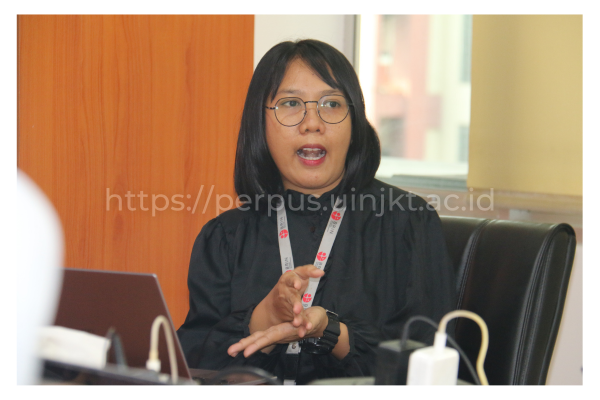 Entering the presentation session, Anggi Denok encouraged the UIN Jakarta Press team to understand that converting a scientific work is not simply transferring content into a book format. He explained that the process is an intellectual reconstruction that requires the author to reorganize the flow of thought, clarify the focus of the discussion, and adapt the writing style to the reader's characteristics without compromising the depth of the scientific substance.
"Many authors assume that converting a scientific work simply involves transferring the content into a book format. In fact, the conversion process requires changes in presentation, restructuring the structure, and adjusting the language to make it more communicative without compromising the depth of the scientific analysis," explained Anggi Denok.
Anggi said that one of the biggest challenges in converting a book is breaking away from the highly technical academic writing style. Scientific books, she believes, must still be grounded in strong research, but structured with a more coherent flow, more focused argumentation, and more accessible language to reach a wider audience.
"Editors not only modify the substance of research but also help authors find a more effective way to present it. When the structure, language, and focus of the discussion are appropriate, a scientific work can be transformed into a book worthy of publication and provide benefits to a wider audience," said Anggi.
Throughout the training, the UIN Jakarta Press team actively engaged in discussions and took the opportunity to gain firsthand experience with the speakers. A variety of issues were discussed, including determining the suitability of a manuscript, developing editing strategies, developing reader segmentation, and understanding selection standards and manuscript acquisition.
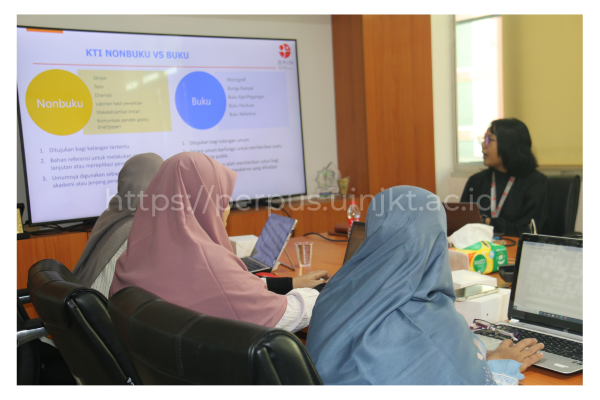 The dynamic discussion demonstrated UIN Jakarta Press's commitment to continuously improving the quality of scientific publishing management. Furthermore, for UIN Jakarta Press, this training is not simply an agenda to increase editorial capacity, but rather part of an effort to build an academic culture that encourages the continued viability of research results, resulting in academic books accessible to a wider audience.
Books are an important medium for extending the life of research, expanding the reach of readers, and strengthening the position of universities as centers for the production and dissemination of scientific knowledge.
The collaboration with BRIN Publishers also serves as a momentum to strengthen synergy between institutions in improving the quality of scientific publishers in Indonesia. Through the experience and best practices of BRIN Publishers in the editorial field, UIN Syarif Hidayatullah Jakarta hopes that more scientific works by academics will be transformed into quality academic books, enriching national literature, and making a real contribution to the advancement of science and national development.
(Contributor: Rizki Mulyarahman; Documentation: Rizki Mulyarahman; Editor: Agus Rifai/Rizki Mulyarahman)
For news updates and further information, please access:




